

Kelsey Park house removals guide for fragile items
Posted on 17/07/2026
![A wooden table inside a home contains various packing and moving materials, including several large sheets of bubble wrap, tightly rolled and partially unrolled, along with cardboard packing tubes and rolls of adhesive tape. There are also a couple of books stacked beside the packaging supplies, and a small clear plastic cup or glass placed on the table. The background features a window with natural light illuminating the scene and a radiator underneath, indicating a domestic environment prepared for packing and home relocation by [COMPANY_NAME], such as Beckenham Man and Van, during a furniture transport or moving process for the Kelsey Park house removals guide for fragile items.](/pub/blogphoto/kelsey-park-house-removals-guide-for-fragile-items1.jpg)
Moving house is stressful enough without worrying about a cracked mirror, a chipped vase, or a box of glassware that suddenly sounds like a maraca. If you are planning a Kelsey Park house removals guide for fragile items approach, the goal is simple: protect the breakables, reduce last-minute panic, and get everything to the new place in one piece. Truth be told, fragile items are often what slow a move down, because they need more thought than ordinary packing.
This guide walks through the practical side of moving delicate belongings in and around Kelsey Park, from packing methods and vehicle loading to common mistakes and better ways to organise the day. It also shows where specialist removal support can help, especially if you are comparing house removals in Beckenham, looking at packing and boxes in Beckenham, or deciding whether a smaller move fits better with man and van services in Beckenham.
By the end, you will know how to prepare fragile items properly, when to ask for help, and how to keep the whole process a lot calmer than it tends to feel on moving day. Let's face it, no one wants to hear the clink of glass from the back of a van.
Why Kelsey Park house removals guide for fragile items Matters
Fragile items are a different game from wardrobes, books, and boxed clothes. They can be light but awkward, valuable but replaceable only at a cost, or sentimental in a way that makes damage feel far worse than the object itself. In a residential move, especially one involving older homes, stairs, tight hallways, or time pressure, fragile packing is where a well-run move separates from a messy one.
In Kelsey Park, as in many established London neighbourhoods, you can also run into the usual realities: narrow parking options, busy streets, and the occasional awkward carry from front door to van. That means fragile items need more than bubble wrap and hope. They need a plan. A good one.
There is also a quality-of-life issue. When delicate items are packed properly, the whole move tends to feel more organised. Boxes are easier to stack. Labels make more sense. The unloading crew does not have to stop and ask, "Is this one important?" every five minutes. Small things, big difference.
Expert summary: fragile-item protection is not just about wrapping things well. It is about sequencing the move, controlling movement inside the vehicle, and deciding which items need extra handling before the first box is even sealed.
How Kelsey Park house removals guide for fragile items Works
The basic process is straightforward, though the details matter. First, you identify the fragile items in the home. Then you group them by type: glass, ceramics, electronics, picture frames, artwork, mirrors, ornaments, lamps, and anything with loose or delicate parts. After that, you choose packing materials that match the item rather than using one-size-fits-all boxes for everything.
Next comes the packing method. Heavier fragile items should go in smaller boxes so they are easier to lift and less likely to be overloaded. Empty spaces inside boxes should be filled so objects cannot shift. Each box should be clearly marked, ideally on more than one side, with handling notes such as "fragile," "this side up," or "do not stack."
Transport is the other half of the process. Fragile boxes should be loaded where they are least likely to move, often after sturdy items are already in place and before anything unstable can crush them. In practice, the best removals teams treat fragile items as a separate loading category, not just "other boxes." That mindset helps avoid careless stacking and rushed handling.
If you are using professional support, it can help to coordinate with a wider move plan through removal services in Beckenham or a more general removals service in Beckenham. The key is making sure fragile items are mentioned early, not after the van has already been loaded half full.
Key Benefits and Practical Advantages
Protecting fragile items properly is about more than damage prevention, although that is obviously the headline benefit. It also reduces stress, speeds up unloading, and makes the whole move feel more in control. If you have ever had to unpack a box only to find broken glass embedded in wrapping paper, you will know that prevention is worth a lot.
- Less breakage risk: the right packing reduces impact, vibration, and crushing pressure.
- Faster unpacking: well-labelled boxes are easier to place in the correct room straight away.
- Better use of space: smaller, properly filled boxes stack more safely in the van.
- Lower emotional stress: sentimental items travel with more confidence.
- More efficient helpers: everyone knows which boxes need gentler handling.
There is also a financial upside. Replacing a few cheap kitchen glasses is one thing. Replacing framed artwork, specialist kitchenware, or a cherished lamp can become surprisingly expensive. And not everything can be replaced neatly, even if money is available. That is especially true for inherited pieces, one-off gifts, or house items that simply belong in the family story.
For larger homes, or moves that include furniture and delicate pieces together, it may be worth exploring furniture removals in Beckenham alongside fragile-item planning, because the order in which items leave the property can affect the safety of everything else.
Who This Is For and When It Makes Sense
This guide is useful for almost anyone moving home in or near Kelsey Park, but it is especially relevant if your home includes lots of breakables, custom pieces, or items with sentimental value. It also makes sense if you are moving on a tight schedule and cannot afford the kind of chaos that turns a box of crockery into a puzzle.
Here are the people who usually benefit most:
- Families moving from larger homes with mixed contents
- Flat movers who need careful handling in tighter spaces
- Students or first-time movers with limited packing experience
- Anyone with artwork, glass furniture, mirrors, or collectibles
- People moving a piano, digital equipment, or specialist items
It is also worth noting that fragile-item planning becomes more important when the move involves stairs, awkward access, or short-notice arrangements. If the move is very local, you may think things will be simple. Sometimes they are. Sometimes the five-minute journey is exactly when a poorly packed lamp gets knocked loose by a sudden stop. A tiny drama, but still a drama.
For renters or flat occupants, it can also help to check whether a smaller vehicle and a careful loading strategy is enough. A local page like flat removals in Beckenham may be more relevant than a full-scale house move if your home is compact and your contents are mainly personal, boxed, and delicate.
Step-by-Step Guidance
Below is a practical way to handle fragile items without overcomplicating the move. Keep it simple, but not sloppy. That balance matters more than people think.
- Sort items by fragility and value. Group together glass, ceramics, electronics, ornaments, and sentimental objects. Decide what must be moved by hand and what can travel in boxes.
- Gather suitable packing supplies. Use sturdy boxes, packing paper, bubble wrap, tape, markers, and where needed, dividers or padded inserts. The box matters as much as the wrap.
- Prepare each item individually. Wrap single items on their own rather than bundling random pieces together. A mug and a plate are not always friends in transit.
- Choose the right box size. Small or medium boxes are usually safer for heavy breakables. A large box full of plates looks efficient until someone tries to lift it.
- Fill voids properly. Any empty space can lead to movement, and movement is what causes chips and cracks. Use paper, soft wrapping, or padding.
- Label clearly and consistently. Write "fragile" and the room name on at least one side, ideally more. If a box has a top side, mark it. Future you will be grateful.
- Load in the right order. Put sturdier, heavier items in first, then fragile boxes in a stable position where they will not be crushed or tipped.
- Unload with care. Place fragile boxes into the correct room first, before the house fills with bags, coats, and "just put it down here for now" energy.
If you are doing the packing yourself, this is the stage where patience helps. It does not need to be perfect. It just needs to be thoughtful. One box at a time. Slow is smooth, smooth is fast, as the saying goes, though admittedly not everyone says it in removal circles.
Expert Tips for Better Results
There are a few small habits that make a surprisingly big difference when handling fragile items during a home move.
Use layered protection for vulnerable pieces
For mirrors, framed pictures, and glass table tops, do not rely on one layer of wrap. Build protection in stages: surface wrap, edge protection, then a rigid outer layer if needed. Corners are the danger points, not the middle.
Keep a "do not load last" box
Some fragile items should stay with you in the car rather than in the van. Think passports, heirlooms, irreplaceable keepsakes, or delicate electronics that would be a nightmare to replace. A small personal box can save a lot of regret.
Use colour-coding where the move is busy
Labels are good. Colour-coding is even better when multiple people are helping. A bright sticker on fragile boxes can cut confusion fast, especially when the house is full of similar brown boxes and someone is racing the clock.
Ask for loading space that does not shift
In a van, fragile boxes should sit flat and snug. If there is spare space around them, they can move during braking or cornering. Ask for cushioning around the load, especially if the route includes uneven roads or stop-start traffic.
Professional movers who already manage specialist loads, such as items supported by piano removals in Beckenham, often understand that delicate handling is about control, not just lifting. That mindset carries over well to glassware, artwork, and ornaments too.
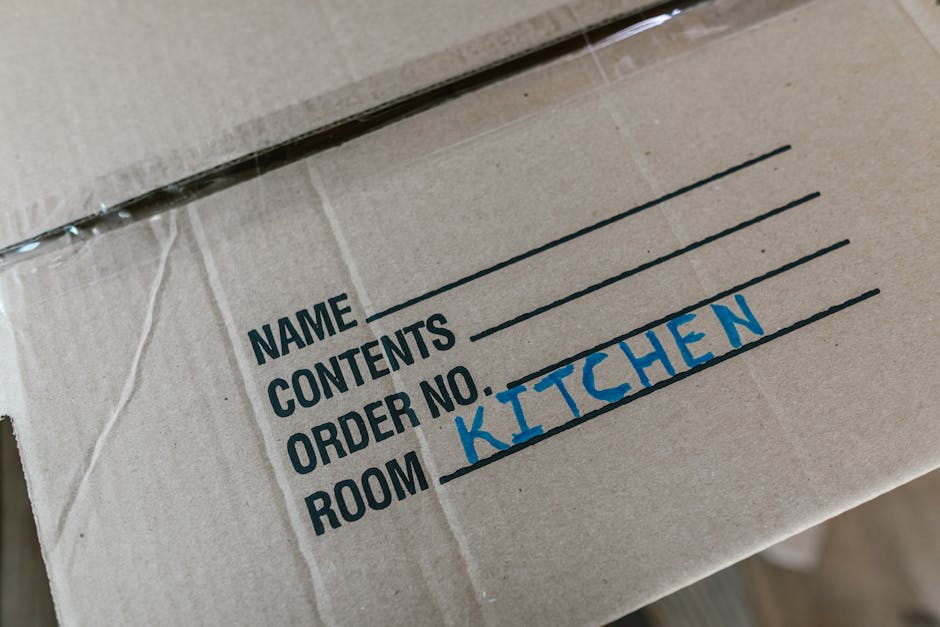
Common Mistakes to Avoid
Most fragile-item damage happens for very ordinary reasons. Nothing dramatic. Just small mistakes that stack up. Here are the big ones.
- Overpacking boxes: too much weight makes lifting risky and increases pressure on the contents.
- Using old, weakened boxes: soft corners and worn tape can fail at the worst moment.
- Mixing heavy and delicate items: a bottle of detergent does not belong with glasses.
- Leaving empty space inside boxes: loose items move, then collide.
- Poor labelling: if people cannot tell what is inside, they cannot handle it properly.
- Assuming "fragile" means nothing without preparation: the label helps, but it does not replace good packing.
- Loading boxes on top of each other carelessly: even strong boxes can crush what is inside if stacked badly.
One common scene, especially on rushed moves, is the "we'll just wrap it in a towel" moment. Sometimes that is enough for a small, sturdy object. Often it is not. Towels compress oddly and can leave gaps. Fine in a pinch, not ideal for anything you genuinely care about. A little blunt, but there it is.
If you are deciding between self-packing and help from a packaging-focused service, package and boxes in Beckenham can be useful to explore before moving day arrives and panic starts chewing through your afternoon.
Tools, Resources and Recommendations
You do not need a warehouse of equipment to move fragile belongings safely. A sensible kit is usually enough. What matters is choosing the right items, not buying every moving accessory under the sun.
| Tool or material | Best for | Why it helps |
|---|---|---|
| Strong small boxes | Glassware, books mixed with padding, ornaments | Keeps weight manageable and reduces crushing risk |
| Packing paper | Wrapping surfaces and filling gaps | Provides flexible protection and movement control |
| Bubble wrap | Delicate ceramics, frames, lamps, electronics | Adds cushioning around vulnerable points |
| Strong tape | Securing box seams | Prevents box failure during lifting and transport |
| Markers and labels | Room marking and handling notes | Helps movers and helpers treat items correctly |
| Blankets or padded wraps | Large fragile items and furniture edges | Useful for protection during carrying and loading |
Practical support can matter just as much as materials. If you are comparing broader move options, a page like services overview can help you see where packing, loading, and transport sit within the overall move. For cost planning, pricing and quotes is the sensible next stop.
And if you are in a smaller property, a more flexible vehicle can be the better fit. A local man with a van in Beckenham or removal van in Beckenham can be a practical choice when you need careful handling without unnecessary complexity.
Law, Compliance, Standards, or Best Practice
For most household moves, the main compliance concern is not a complicated legal one. It is the duty to handle belongings with reasonable care, operate safely, and be honest about what the move includes. That said, good practice in the removals industry usually covers a few sensible areas.
Health and safety: lifting should be managed carefully, boxes should not be overloaded, and walkways should stay clear. Good movers avoid creating trip hazards, especially on stairs and narrow landings. If you are packing yourself, the same logic applies at home.
Insurance and declared value: fragile or high-value items may need to be mentioned in advance so expectations are clear. Not every item is covered in the same way under every service arrangement, so it is wise to check the terms before moving day. There is no glamour in this bit, but it matters.
Best practice: professional movers usually prefer correctly packed items rather than loose or loosely wrapped pieces. That is because packaging quality directly affects handling safety. The better the packing, the less room there is for dispute later. Calm is good. Clear is better.
If you want to understand the standards behind careful handling, insurance and safety information is worth a look. For broader company values and operating approach, about us gives useful context without overcomplicating things.
Options, Methods, or Comparison Table
Not every fragile move needs the same level of support. Some people only need good packing advice. Others need full service help. Here is a clear comparison to make that decision easier.
| Option | Best for | Pros | Limitations |
|---|---|---|---|
| Self-pack and self-load | Small moves with a few breakables | Lowest service cost, full control | Higher risk if packing skills are limited |
| Self-pack with van support | People confident packing but needing transport help | Good balance of control and convenience | You still carry the packing responsibility |
| Full removal support | Busy households, larger homes, or valuable fragile items | Less stress, better coordination, safer handling | Usually higher cost than doing it all yourself |
| Specialist packing for fragile items only | Mixed moves with a few very delicate pieces | Focused help where it matters most | Not a complete solution for the whole property |
For many local moves, a hybrid approach works best: pack the ordinary items yourself, then get help with the awkward, breakable, or bulky pieces. That way, you keep control without trying to become a packing specialist overnight. Nobody needs that pressure.
Case Study or Real-World Example
Here is a realistic example based on the kind of move people often face around Kelsey Park.
A couple moved from a three-bedroom home with a mix of everyday household items and a surprisingly fragile collection: framed prints, wine glasses, a couple of lamps, ceramic serving dishes, and one awkward antique mirror that had been hanging in the hallway for years. They had originally planned to pack everything in large boxes to save time. Sensible in theory, messy in practice.
After reviewing the contents, they switched to smaller boxes for crockery, added extra paper around the mirror corners, and separated the glassware from the decorative pieces. They also marked each fragile box clearly and kept the mirror upright during loading. The removal team placed those items where they would not slide, then unloaded them first at the new property.
The result was not magical. There was still stress. There is always some stress. But nothing broke, nothing cracked, and the move felt controlled rather than frantic. The couple later said the turning point was simply treating fragile items as a separate category instead of just "stuff in boxes." That sounds obvious, but it often is not obvious until a move is underway.
That same approach works whether you are moving locally or using support from house removals in Beckenham. The more clearly fragile items are planned, the smoother the day tends to go.
Practical Checklist
Use this checklist in the days leading up to the move. It is simple, but it catches the most important bits.
- Sort fragile items into categories
- Set aside small, strong boxes for breakables
- Buy enough packing paper, tape, and markers
- Wrap each item individually where needed
- Fill empty spaces inside boxes
- Keep heavy fragile items in smaller boxes
- Label boxes on multiple sides
- Mark the top and handling direction clearly
- Tell the removal team about high-value or especially delicate pieces
- Plan which items will travel with you, not in the van
- Load fragile boxes so they cannot slide or be crushed
- Unpack fragile items first in the new home
One useful extra step: take quick photos of anything particularly valuable before it is packed. Not because something is expected to go wrong, but because it gives you a record of condition and makes sorting later easier. A tiny habit, very helpful.
Get a free quote today and see how much you can save.
![A wooden table inside a home contains various packing and moving materials, including several large sheets of bubble wrap, tightly rolled and partially unrolled, along with cardboard packing tubes and rolls of adhesive tape. There are also a couple of books stacked beside the packaging supplies, and a small clear plastic cup or glass placed on the table. The background features a window with natural light illuminating the scene and a radiator underneath, indicating a domestic environment prepared for packing and home relocation by [COMPANY_NAME], such as Beckenham Man and Van, during a furniture transport or moving process for the Kelsey Park house removals guide for fragile items.](/pub/blogphoto/kelsey-park-house-removals-guide-for-fragile-items3.jpg)
Conclusion
Moving fragile items does not need to be a source of chaos. With the right packing, careful labelling, and sensible loading, even a busy house move around Kelsey Park can feel orderly and manageable. The work is in the preparation, not the panic.
If you remember only one thing from this guide, make it this: fragile items should never be an afterthought. Give them their own plan, their own materials, and their own place in the moving order. That is usually what keeps the day calm, or at least calm-ish. And honestly, calm-ish is a very decent result on moving day.
When you are ready to put that plan into action, a little expert support can make the whole process feel lighter. Not perfect. Just easier. And sometimes easier is exactly what a move needs.